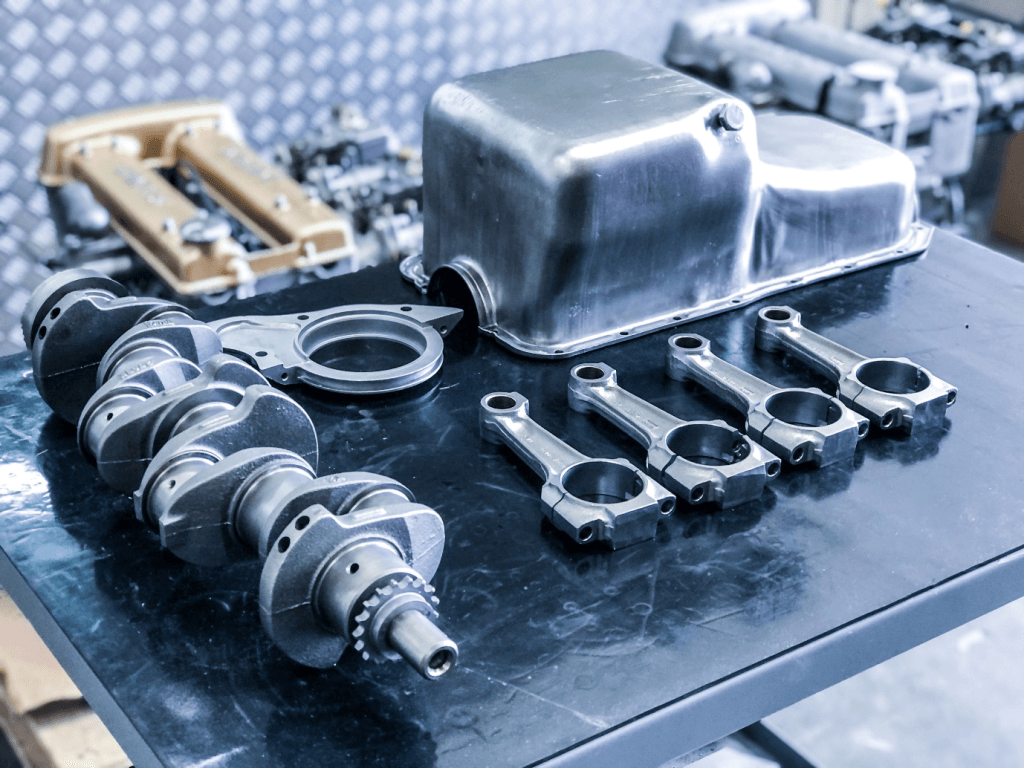

For classic car restorers, motorcycle builders, and performance tuners across Gauteng, aluminum engine castings present a persistent restoration challenge. Over decades of service, cast alloys become deeply impregnated with baked-on oil varnish, stubborn carbon deposits, and white powdery oxidation. Trying to clean these sensitive metals with traditional wire brushing or harsh chemical baths is often labor-intensive, inconsistent, and risks scratching the surface finish.
The alternative—standard dry sandblasting—frequently ruins rare automotive components by erosion. High-velocity dry media impacts can alter critical tolerances on cylinder head mating faces, pit finely machined bearing journals, and distort combustion chamber volumes. To achieve a factory-correct finish while protecting physical dimensions, specialized workshops choose high-precision automotive vapour blasting johannesburg services to safely refurbish historic and performance alloys.
The Mechanical Risk of Abrasive Media Implantation
Beyond dimensional erosion, dry sandblasting creates a hidden mechanical threat known as media particle implantation. When dry grit hits raw cast aluminum at high speed, the force can split the particles, driving microscopic fragments deep into the metal’s surface pores. On external brackets, this causes cosmetic issues; however, inside critical automotive castings, the results can be devastating.
If dry blasting media is used on oil filter housings, cylinder heads, or complex engine blocks, small fragments can remain stuck inside internal oil galleries and cooling passages. Once the engine reaches full operating temperature, thermal expansion opens the aluminum pores, releasing these trapped abrasive particles directly into the engine oil. This abrasive material travels straight to main bearings and camshaft journals, acting as a grinding paste that causes early engine failure.
Preserving Cast Lines and Stamped Manufacturing Details
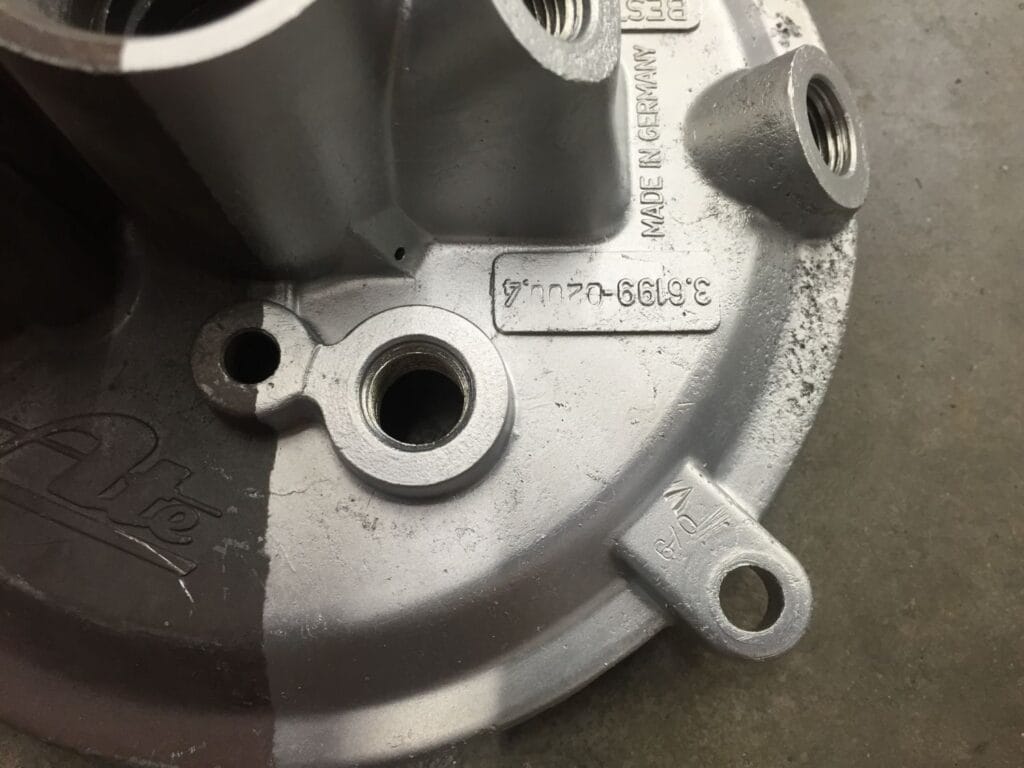
For high-value classic car and motorcycle restorations, maintaining original factory markings is critical for historic authenticity and vehicle valuation. Aggressive dry abrasive cleaning methods often wear down fine details, rounding off crisp cast edges, flattening raised casting numbers, and erasing delicate manufacturer logos.
Vapour blasting solves this issue by substituting brute impact force with hydraulic shear. Because the fine media is suspended within a pressurized water slurry, the fluid layer acts as a cushion that protects the metal substrate. The slurry moves smoothly across complex cast shapes, flushing away carbon and grease while leaving original manufacturing stamps, machining marks, and cast lines perfectly intact.
The Cost-Efficiency Blueprint: Vapour Blasting vs. Part Replacement
When dealing with heavily oxidized or contaminated automotive parts, replacement is often considered the default path to ensure reliability. However, for rare classic vehicles or specialized performance builds, sourcing OEM replacement parts can introduce high shipping costs and extended customs delays. Wet abrasive processing offers a reliable way to avoid these high replacement costs by safely bringing original parts back to factory-new condition.
| Automotive Component Type | Sourcing & Replacement Cost Risk | Vapour Blasting Cost Advantage | Structural & Cosmetic Result | |
|---|---|---|---|---|
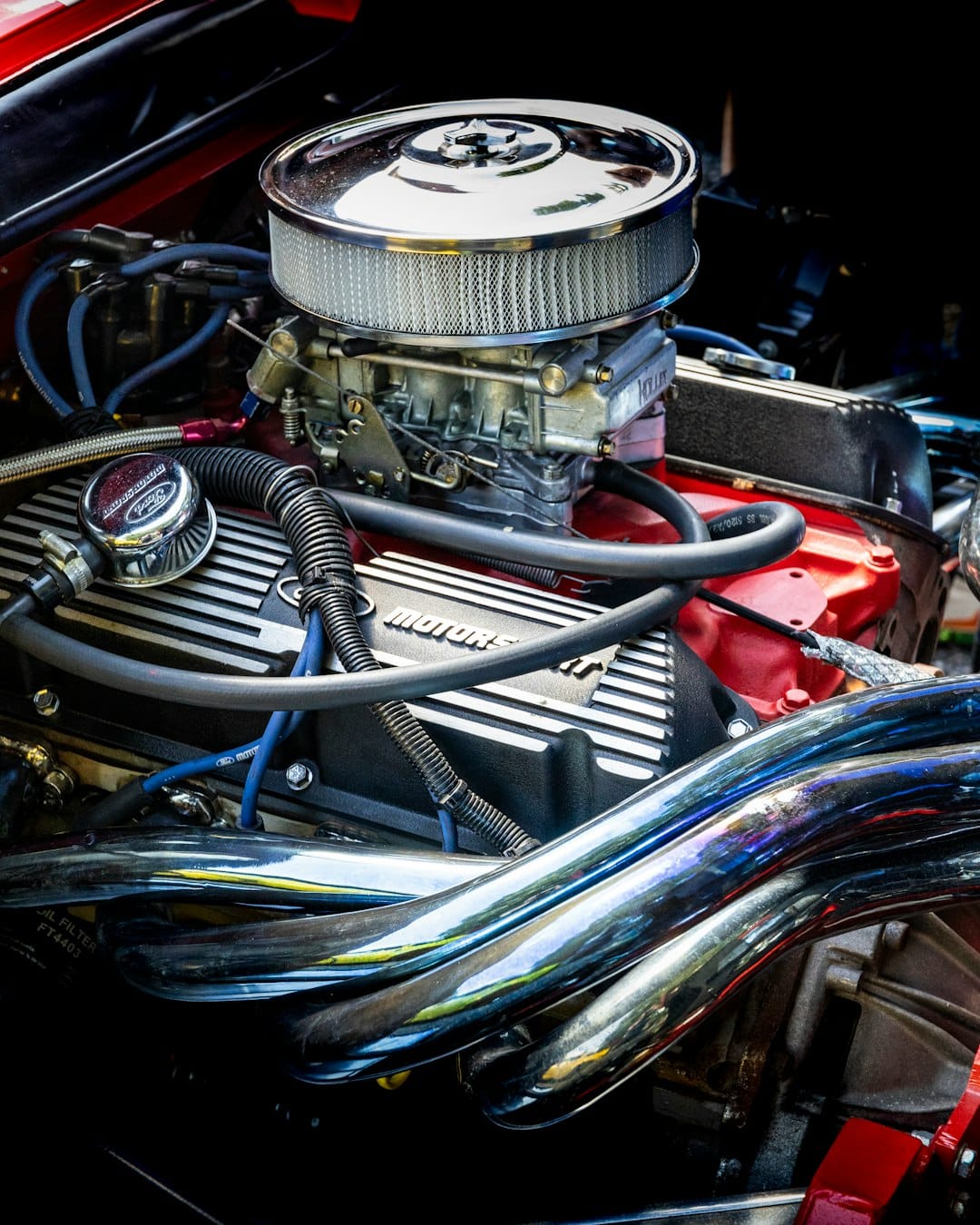
| Vintage Carburetor Banks | High replacement costs; hard to source matching serial numbers. | Fraction of replacement cost; completely clears internal fuel circuits. | Restores natural zinc/brass luster; keeps throttle bore clearances exact. | |
| Multi-Valve Cylinder Heads | High cost for bare castings; extra machining required for new assemblies. | Saves the existing head casting; safely removes combustion carbon. | Mating faces and valve guide bores remain precise to the micron. | |
| Aluminum Engine Blocks | Extremely high cost; difficult logistics and vehicle registration challenges. | Eliminates high costs; preserves original matching engine numbers. | Completely cleans deep cooling fins; creates an oil-resistant satin finish. |
Mitigating Gauteng’s Highveld Weather and Corrosion Factors
Vehicles running and stored in the greater Johannesburg region face unique environmental conditions that speed up metal oxidation. The Highveld’s climate features intense summer rainstorms followed by dry, dust-heavy winters. This cyclic moisture profile creates a challenging environment for bare, unprotected cast alloys.
When raw aluminum engine parts are cleaned using old-school dry sandblasting, the aggressive impact creates a highly porous, deeply pitted surface profile. This rough finish easily traps atmospheric moisture, fine road dust, and industrial chemical pollutants, leading to rapid white-rust oxidation. Choosing specialized vapour blasting gauteng workflows gives local car enthusiasts a distinct protective advantage. The micro-peening action of the wet slurry flushes away old oxidation while smoothing out the metal’s surface pores, creating a uniform satin finish that naturally sheds moisture and resists future chemical staining.
A Safe Finish for Precision Valve Trains and Intake Tracts
High-performance engine builds require clean surfaces inside intake tracts and combustion chambers to ensure optimal airflow and reliable operation. Baked-on carbon deposits on valves and inside intake runners disrupt air velocity, reducing overall engine efficiency. Vapour blasting thoroughly strips these hard carbon crusts without altering the underlying metal profile or shaping intake port shapes.
This level of precision cleaning is equally valuable for delicate components like external oil coolers, aluminum radiators, and intricate overhead valve train assemblies. The water carrier constantly cleans the blasting zone, preventing the media accumulation issues common to dry blasting cabinets. The resulting clean metal finish gives engine builders a perfect surface for accurate crack detection testing (NDT) before final reassembly.
Bring Your Automotive Castings Back to Factory Specifications
Achieving a reliable, high-quality finish on rare or high-performance automotive alloys requires professional care and dedicated industrial equipment. VaporEdge Industries runs a specialized, closed-loop wet abrasive system engineered to clean complex automotive, motorcycle, and marine components without causing metal loss or dimensional drift.
Our workshop is centrally located in Malvern East / Bedfordview, making it easy for local builders to drop off parts, while our nationwide courier integration via The Courier Guy provides reliable transit options for clients across South Africa. This allows your restoration project to move forward smoothly without long delays.
Whether you are restoring a rare vintage intake manifold, cleaning a classic multi-valve head, or preparing a performance engine block for assembly, our non-destructive process delivers a uniform, stain-resistant finish that meets strict factory standards. Read more about our specialized workflows on our professional vapour blasting services page, or contact our engineering team via the VaporEdge Industries homepage to arrange a custom quote for your project today.