
Stop the Damage: Why Cleaning Isn’t Enough for Precision Parts
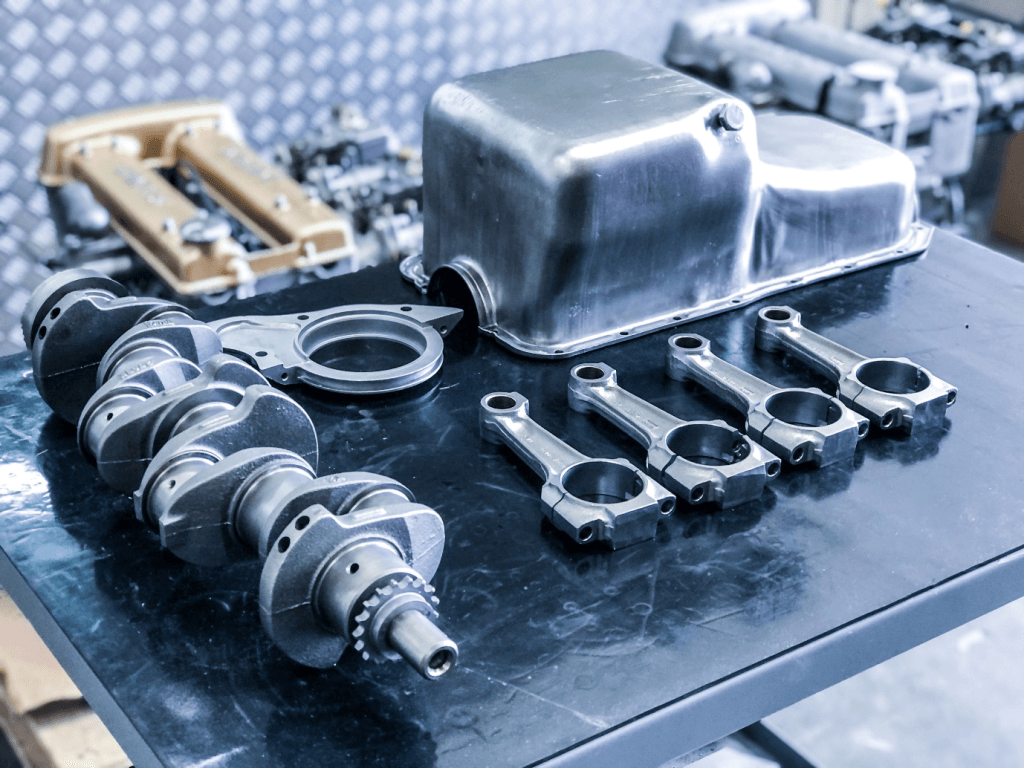
In mechanical restoration, clean is not the finish line, it’s just the starting point. Many workshop owners across Johannesburg rely on traditional abrasive blasting to remove grease, carbon, and corrosion, believing that if the part looks clean, the job is done. But the method of cleaning determines whether a restored component lasts ten years or fails in two. When dealing with precision engine parts, classic car castings, or marine hardware, the wrong cleaning approach can destroy the very value you are trying to restore.
This is where non-destructive vapour blasting changes the equation. Unlike dry blasting, which strips metal along with the contamination, wet slurry cleaning removes dirt and oxidation while preserving the original surface geometry. For workshops and restorers in Gauteng, understanding the difference is the difference between a restoration that holds its value and one that introduces hidden failure points.
Why Sandblasting Fails on Precision Parts
Dry abrasive blasting works by firing high-velocity particles at the surface. On heavy structural steel this is acceptable, but on precision automotive and marine castings it introduces three specific problems that are often invisible until the part is back in service.
Surface pitting and erosion. The impact of dry media removes microscopic layers of base metal alongside the contamination. On an engine block deck surface or a cylinder head mating face, this dimensional loss can affect seal compression. The part may look restored, but the tolerances have shifted.
Media implantation into porous metals. Cast aluminium and magnesium are porous materials. When dry grit strikes these surfaces at high velocity, the particles fracture and embed themselves into the microscopic pores of the metal. On oil-fed components like cylinder heads or engine blocks, these embedded fragments can later dislodge once the engine reaches operating temperature. The thermal expansion of the aluminium opens the pores, releasing abrasive particles directly into the oil system, where they travel to main bearings and cam journals as grinding paste. This is not a theoretical concern — engine builders regularly report bearing failure traced back to embedded blast media from improperly cleaned components.
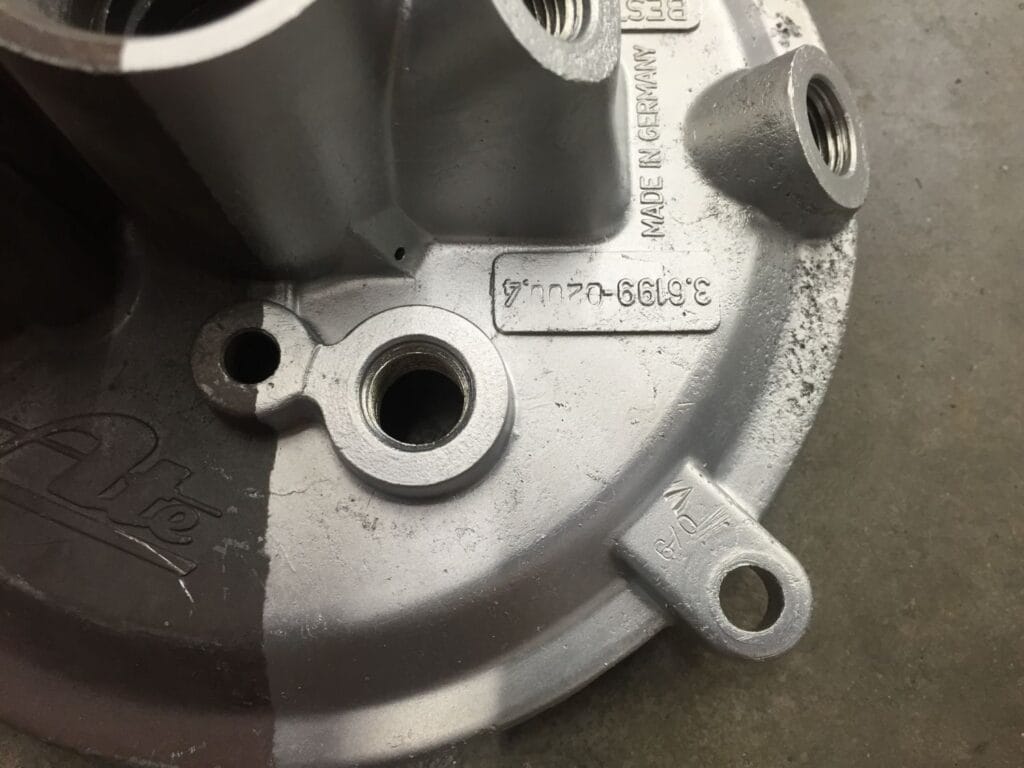
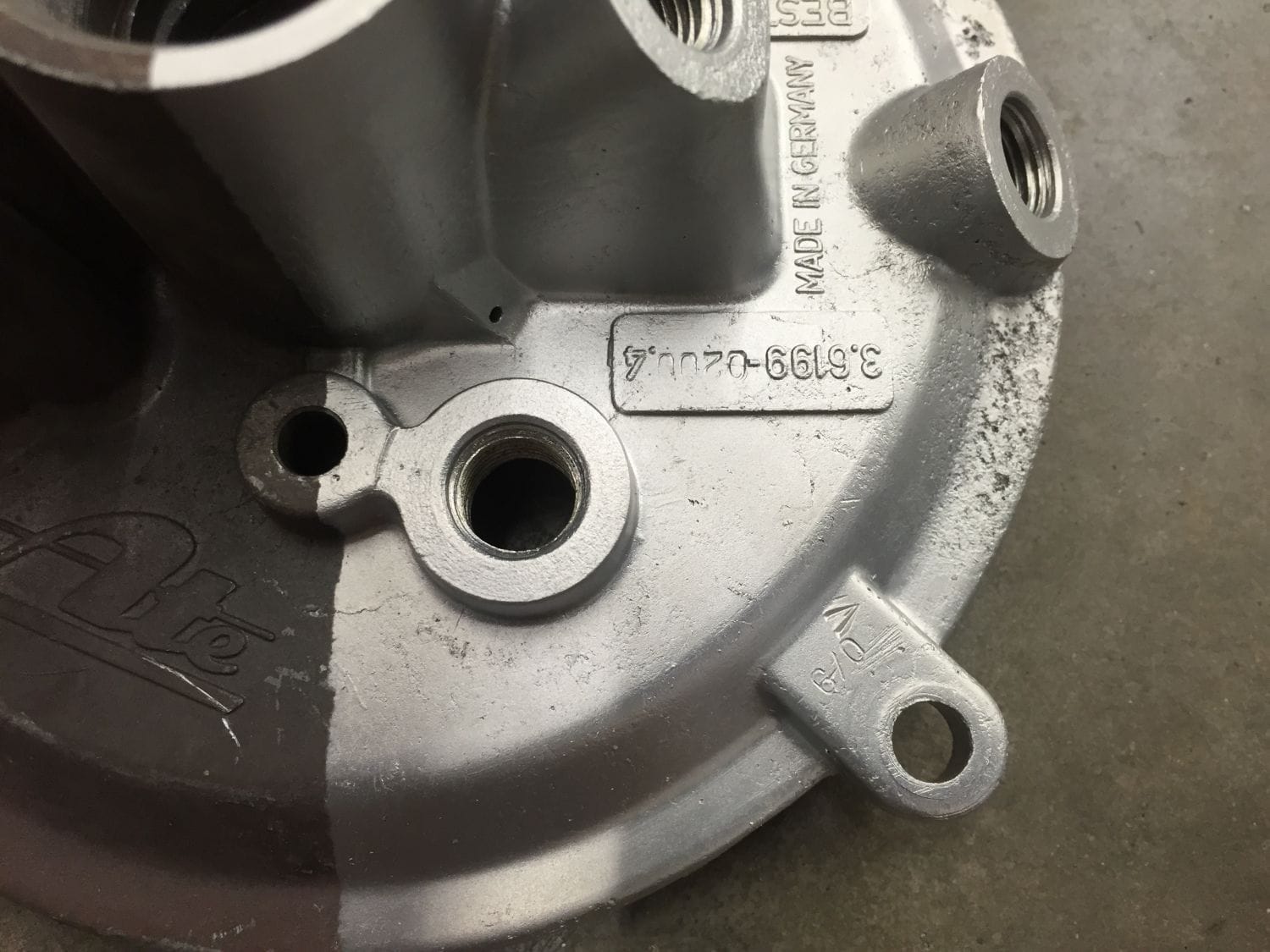
Loss of authentic casting marks. For classic car and motorcycle restorations, original factory markings, date stamps, and casting numbers are essential for period-correct authenticity and vehicle valuation. Dry blasting rounds off these details irreversibly. The part can never be returned to its original documented state.
How Vapour Blasting Solves Each Problem
Vapour blasting, also known as wet blasting, liquid honing, or aqua blasting, replaces dry kinetic impact with hydraulic shear. A pressurised slurry of water and fine abrasive media is directed at the component surface. The water layer cushions each particle, so contamination is washed away while the underlying metal remains untouched.
Zero dimensional loss. Because the abrasive is suspended in liquid, the impact is distributed evenly across the surface. Contaminants are removed, but base metal is not eroded. Tolerances remain within factory specification, and there is no need to remachine mating surfaces after cleaning. For workshops doing precision automotive vapour blasting in Johannesburg, this is the primary reason for choosing wet blasting over dry methods.
Surface peening prevents future corrosion. The water slurry micro-peens the metal surface as it cleans. This compresses the outer layer of the aluminium, closing microscopic pores that would otherwise trap moisture and contaminants. The result is a component that stays cleaner longer and requires less frequent restoration. This closed-pore effect is particularly valuable on marine and industrial parts that operate in corrosive environments. Our industrial vapour blasting extends component lifespan precisely through this peening mechanism.
Casting marks and details are preserved. Raised casting numbers, manufacturer logos, and machined reference surfaces survive the process intact. For restorers, this means the provenance of the part is maintained. For performance builders, it means sharp edges and defined geometry remain as the manufacturer intended.
Why Dust-Free Matters for Your Workshop
Beyond the part itself, dry blasting creates a cloud of airborne silica dust that settles throughout the workshop. Vapour blasting eliminates this hazard entirely. The water content in the slurry suppresses airborne particles, creating a cleaner, safer working environment. For workshops in the Bedfordview and Malvern East areas where space is at a premium, the ability to operate without dust containment is a practical advantage.
When to Choose Non-Destructive Cleaning
If your project falls into any of these categories, traditional abrasive cleaning introduces unnecessary risk:
- Automotive restoration: Cylinder heads, gearboxes, engine blocks, and manifolds where surface integrity and dimensional accuracy are non-negotiable.
- Marine hardware: Outboard components, jet pump housings, and propeller hubs where corrosion removal must not reduce wall thickness.
- Precision engineering: CNC-machined components and hydraulic assemblies that require a uniform satin finish for sealing or aesthetic purposes.
- Motorcycle restoration: Air-cooled engine casings and cooling fins where thin-wall castings are vulnerable to dry blasting damage.
For any of these applications, the goal is not simply to make the part look clean. The goal is to restore the component to a state where it can return to service with zero compromise to its structural integrity. That requires a cleaning method that removes contamination without removing metal.
The Process
Every component we treat follows the same six-step quality path: inspection on arrival, hot degreasing to remove bulk oil and grease, vapour blasting with calibrated pressure and media matched to the material, clean water rinse and compressed air drying, post-treatment corrosion protection on steel components (ACF-50), and a final quality check before collection. Our 48-hour turnaround means most components are ready within two working days of drop-off at our JHB South workshop.
The difference between a clean part and a properly restored part is the method used to get it there. Vapour blasting delivers the finish that conventional methods promise but cannot achieve without compromising the component.
Get a quote for your components — we respond within two hours during business hours.
Ready to see the difference precision makes?
Get a Professional Quote Today